


Feeling overwhelmed by client deadlines? Are you stuck in a rut that feels impossible to shake? Here’s a surprising solution: the same project management principles that streamline chaotic SEO campaigns can be your secret weapon for personal growth. By applying tools and strategies you already use daily, you can transform how you tackle your individual goals—whether building leadership skills, boosting adaptability, or levelling up your career in digital marketing.
Project management isn’t just about hitting deadlines or juggling tasks. It’s about creating clarity, setting priorities, and fostering progress. And those same principles? They work wonders outside the office, too.
Let’s reframe how you think about personal growth and explore how project management tools can help you grow into the marketer—and leader—you’re striving to become.
Identifying Key Personal and Professional Goals
Long-term career growth is about more than just about delivering for clients. It’s also about delivering for yourself. Setting personal and professional goals beyond the scope of client work is the key to carving out a path that aligns with your aspirations. These goals provide focus and purpose, helping you grow in ways that directly influence your success in digital marketing. The best part? With a strategic approach, you can make progress without feeling overwhelmed.
Start by anchoring your goals to your career vision. Picture where you want to be a few years down the road. Leading a team? Mastering a specific skill? Expanding your network? By breaking your ambitions into manageable quarterly and annual milestones, you can make steady progress and keep your eyes on the bigger picture. Here are some examples of how:
- Deepen Your Expertise: Commit to learning advanced SEO analytics or diving into user experience (UX) design to expand your technical toolkit.
- Grow Your Network: Set a goal to connect with ten industry peers or attend three must-hit events in the next quarter to open doors and build relationships.
- Step Into Leadership: Lead an internal project or enrol in a leadership development course to develop confidence and credibility.
- Master Your Time: Build systems to prioritise tasks, reduce procrastination, and balance client and personal projects efficiently.
- Stay Ahead of Trends: Explore AI tools, automation software, or advancements in digital marketing analytics to future-proof your expertise.
- Enhance Communication: Take on opportunities to present at industry events or host webinars to sharpen public speaking skills and establish authority.
- Strengthen Your Brand: Build a cohesive online presence through a professional website, consistent social media activity, or guest posts on industry blogs.
- Navigate Challenges Like a Pro: Develop strategies for managing high-pressure situations—client conflicts, project delays, or tight deadlines—with poise.
- Cultivate Creativity: Dedicate time to brainstorming, creative writing, or testing new content formats to fuel innovation.
- Refine Team Dynamics: Focus on interpersonal skills to foster collaboration, mentor teammates, and resolve conflicts effectively.
By aligning these goals with your career aspirations, you’re not just staying competitive and setting the foundation for sustained growth and leadership in our fast-moving industry.
Defining SMART Goals
SMART goals are specific, measurable, achievable, relevant, and time-bound objectives that provide clear direction and accountability.
Applying this framework to the goals above ensures they are actionable and trackable – for instance, “connect with ten industry peers in the next three months” is a SMART goal because it defines the action, sets a clear metric, and includes a deadline. Using SMART goals, you can focus your efforts effectively, measure progress, and stay motivated as you work toward personal and professional growth.
To make your goals actionable, apply the SMART framework:
- Specific: Clearly define what you want to achieve.
- Example: Learn advanced features of Google Analytics.
- Measurable: Quantify your progress.
- Example: Complete a 10-hour online course and pass the certification exam.
- Achievable: Set realistic expectations based on your current skills and time.
- Example: Dedicate two hours per week to the course over five weeks.
- Relevant: Ensure the goal aligns with your career needs.
- Example: Improved analytics skills help optimise SEO campaigns.
- Time-bound: Establish a deadline.
- Example: Earn certification by the end of Q1.
By setting SMART goals that align with your career aspirations and focusing on areas like technical expertise, leadership, and creativity, you can take meaningful steps toward long-term success in digital marketing. With a clear plan and intentional action, you build a foundation for growth, adaptability, and leadership in a competitive industry.
Examples of Personal Growth Goals
Advancing your career in digital marketing requires more than meeting client deadlines. It must also focus on setting goals that push your skills, mindset, and influence to the next level. Here are actionable ways to grow personally and professionally:
- Grow Your Network: Build relationships by attending two monthly industry webinars or joining a professional association.
- Step into Leadership: Take a management course or mentor junior colleagues to refine your leadership capabilities.
- Stay Ahead of Trends: Pursue certifications in artificial intelligence, machine learning, or digital transformation to future-proof your expertise.
- Master Work-Life Balance: Use tools like mindfulness apps to establish routines that protect your mental well-being while excelling professionally.
- Expand Emotional Intelligence: Hone self-awareness and empathy to strengthen team collaboration and client relationships.
- Build Cultural Competence: Commit to reading one industry-related book per month and learning a new language or cultural nuances to connect with diverse teams and clients.
These personal growth goals highlight how focusing on quarterly and annual milestones can drive growth. By structuring your development intentionally, you can balance client demands with personal achievements, but you have to put in the work on yourself as much as you do for your clients.
Examples of Soft Skills and Leadership Traits
Using personal project management to develop soft skills can yield profound professional benefits, equipping you for leadership and collaboration. Here are some examples of soft skills and leadership goals to set:
- Make Confident Decisions: Prioritizing personal goals sharpens your decision-making, helping you craft informed client strategies and drive successful outcomes.
- Communicate with Impact: Tracking your progress builds clarity in articulating needs and results, improving team collaboration, and fostering trust in client relationships.
- Think Strategically: Breaking down complex goals into actionable tasks enhances your foresight, ensuring team efforts align seamlessly with organisational objectives.
- Resolve Conflicts Effectively: Cultivating mediation skills creates win-win scenarios, strengthens team dynamics, and easily smoothes over client challenges.
- Embrace Empathy: Understanding others’ perspectives fosters collaboration and trust, vital for effective teamwork and nuanced client interactions.
- Adapt to Change: Flexibility in pivoting strategies ensures resilience and positions you as a problem-solver ready to navigate shifting market trends or challenges.
- Master Delegation: Assigning tasks effectively empowers your team, optimising productivity while letting you focus on strategic initiatives.
- Drive Innovation Through Critical Thinking: Objective analysis and creative problem-solving lead to better decision-making and proactive anticipating challenges.
- Inspire with Influence: Persuasion skills enable you to rally support, secure buy-in from stakeholders, and lead teams toward shared goals.
- Stay Disciplined: Consistency and reliability in following through on commitments build credibility and inspire confidence in peers and clients.
These soft skills enhance individual contribution and prepare you for leadership roles. A leader who communicates clearly, resolves conflicts deftly, and adapts strategically becomes a trusted guide, inspiring confidence across teams and clients.
Step-by-Step Guide for Setting Up a Personal Project Board
Project management tools such as Trello, Asana, and ClickUp are not limited to managing team workflows. They also serve as powerful platforms for tracking both personal and professional growth. With their ability to organise goals, set priorities, and maintain accountability, these tools are perfect for managing everything from career development plans to wellness routines.
- Choose a Platform: Select a tool that suits your style. While we discussed a few above, with a little elbow grease you can set up almost any project management tool to help you track your goals in a way that supports you meeting them.
- Create a Personal Place: Set up a dedicated place to track goals. Define categories tailored to your growth areas.
- Customise Your Place:
- Add deadlines to tasks to ensure timely progress.
- Use colour-coded labels for quick visual cues (e.g., red for high-priority tasks and green for completed ones).
- Include notes or links within tasks for easy reference.
- Integrate Reminders: Use built-in notification features to prompt you about deadlines or upcoming tasks.
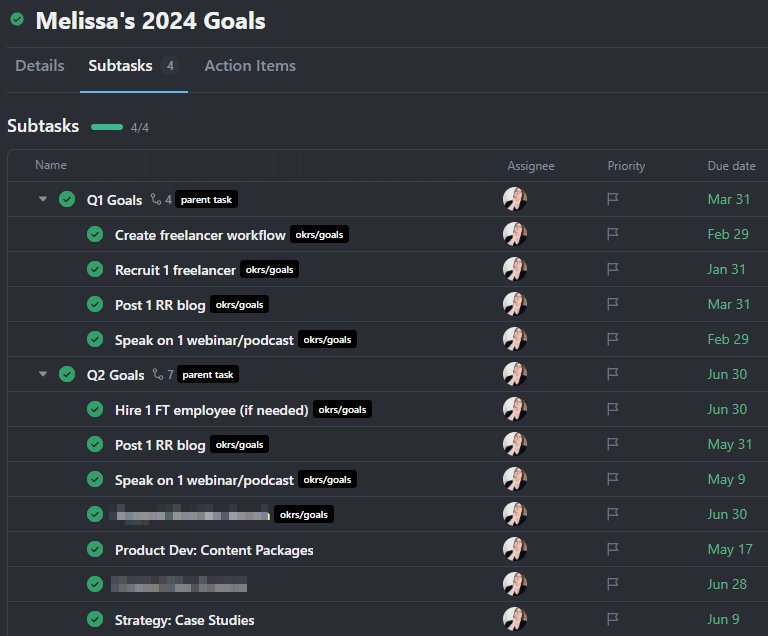
Customising your project board will depend on the tool you choose and will help make tracking progress intuitive and engaging, ensuring you stay focused on your goals. You create a system that aligns perfectly with your objectives by tailoring categories, labels, and workflows to your specific needs. This personalisation keeps you motivated and makes it easier to visualise your progress at a glance.
Breaking Down Big Goals into Manageable Tasks
Large goals can be intimidating when there isn’t a clear action plan. Breaking them into smaller, manageable tasks makes the process more approachable and keeps your momentum strong. For instance:
- Goal: Complete an SEO certification.
- Research Courses: Explore options like RankSuite, Semrush Academy, or Google Skillshop.
- Enrol: Register for the selected course.
- Set Weekly Learning Targets: Allocate specific modules to each week.
- Practice and Review: Complete assignments or quizzes to reinforce learning.
- Certification Exam: Schedule and prepare for the final test.
Tracking smaller tasks allows you to celebrate milestones, which helps boost motivation. Regularly updating your progress, such as marking tasks as complete and adjusting timelines, ensures you stay aligned with your objectives.
Using project management tools to break down large goals into manageable steps transforms even the most ambitious aspirations into achievable actions. This approach creates a clear path for sustained personal and professional growth.
Building a System for Regular Check-ins
Regular check-ins are critical in keeping your growth on track and maintaining momentum. Dedicating time to review your progress helps you reflect on what works well and identify areas needing adjustments. Consistent check-ins ensure your efforts remain aligned with your long-term aspirations while allowing you to celebrate small wins along the way.
Establishing a specific schedule for evaluations, such as weekly or monthly reviews, helps create a habit of accountability. Use this time to analyse whether your strategies are practical and prioritise any adjustments to your plan. Regular check-ins also allow you to assess whether new opportunities or challenges have emerged, helping you stay adaptable.
Scheduling Personal Growth Sprints
To ensure consistent progress, schedule regular intervals such as monthly or quarterly reviews to reflect on your achievements and make necessary adjustments. These scheduled check-ins provide an opportunity to assess your goals, evaluate your strategies, and identify areas for improvement. By committing to this routine, you can stay focused, adapt to new challenges, and maintain steady momentum toward your objectives. Here’s what to do to get started with scheduling your growth sprints:
- Set a Recurring Date: Block off time on your calendar for a dedicated “growth sprint.” This could be the first Monday of each month or the last Friday of each quarter.
- Review Progress: Use your project management tool to assess completed tasks, track milestones, and evaluate goals that may need adjustment. Ask yourself:
- What have I accomplished since my last check-in?
- Are my goals still relevant to my long-term aspirations?
- Do I need to shift priorities based on new opportunities or challenges?
- Adjust as Needed: If specific goals seem unrealistic or less impactful, revise them. This flexibility ensures you’re focusing on what truly matters.
Tips for Accountability and Motivation
Staying motivated and accountable can sometimes feel difficult, but using effective strategies can make a significant difference. Start by sharing your goals with a trusted colleague, mentor, or friend who can check in regularly and help keep you on track. Break larger goals into smaller, manageable milestones to make progress achievable and rewarding.
Celebrate even the smallest wins along the way, as recognising your achievements can boost morale and reinforce your commitment. Use tools like habit trackers or project management apps to monitor your progress and maintain a sense of accountability. Reflect regularly on your “why” to stay connected to the bigger picture and remind yourself of what you are working toward. Incorporate these practices into your routine to build consistency and maintain momentum on your personal and professional growth journey.
Maintaining motivation and accountability is challenging, but these strategies help:
- Find an Accountability Partner: Share your goals with a trusted colleague or mentor who can provide encouragement and hold you accountable. Schedule regular check-ins with them to discuss progress.
- Use a Progress Journal: Track your journey in a dedicated journal, noting successes, challenges, and lessons learned. Reflecting on your growth can reinforce your commitment and boost your morale.
- Leverage Technology: Use built-in reminders in project management tools to keep your goals front and centre. Automating reminders reduces the risk of forgetting milestones.
- Balance Personal Goals with Work Commitments:
- Time Blocking: Dedicate specific periods to personal growth activities, treating them as non-negotiable appointments.
- Prioritise: Break large goals into smaller, manageable steps to prevent overlap with demanding client work.
Creating a system for regular check-ins helps ensure your growth stays purposeful and consistent. This practice strengthens accountability and provides a clear structure to evaluate your progress. By maintaining this balance, you can work toward your goals effectively while sustaining productivity in your professional life. Regular reflection also empowers you to adapt to challenges and seize new opportunities.
Why Investing in Your Development Pays Off
Feeling overwhelmed by deadlines or stuck in a professional rut? Personal growth might not seem obvious, but it can be your solution. By applying project management principles to your personal and professional development, you can create clarity, set actionable priorities, and make steady progress toward your goals. The tools and strategies you use to manage complex SEO campaigns can also help you meaningfully enhance your skills and mindset.
Investing in your growth keeps you competitive in an industry where adaptability and innovation are essential. It equips you with the confidence and clarity to take on leadership roles, tackle challenges head-on, and find purpose in your work. More importantly, it helps you build the resilience and strategic mindset needed to navigate our industry and any industry.
Your development is not just about staying relevant; it is about thriving. By refining your skills, building your expertise, and expanding your perspective, you position yourself as a forward-thinking professional capable of confidently leading. Investing in yourself lays the foundation for long-term career success, fulfilment, and the ability to achieve even your most ambitious goals.
You Are Your Most Important Client
As digital marketers, we dedicate endless energy to helping our clients grow and succeed. But we all need a perspective shift: you are your most important client. Investing in your development ensures long-term success for yourself and the people you serve. When you improve personally, the value you bring professionally rises as well.
What if you approached your personal growth like a project? Consider project management as more than just a professional tool for tracking deadlines and tasks. It can also be a framework for turning your ambitions into tangible accomplishments. By setting clear goals, breaking them into actionable steps, and tracking progress, you can take control of your career and personal growth in a way that feels intentional and rewarding.
The tools you use daily to organise client campaigns are already in your hands. Why not leverage them to build the career and life you have envisioned? When you treat your development with the same care and focus you give your clients, the results can be transformative. The better you are, the greater the impact you can make—for yourself, your team, and your clients.

Melissa Popp
Melissa Popp is a seasoned content marketing expert with over 20 years of experience, specializing in crafting engaging and authoritative content that drives local SEO success for businesses big and small.